Saturday, 25 April 2020

The story of a Historian Orator and Author: Mr Muso

By Brian Maregedze

The Zimbabwe’s New Curriculum under the ministry of primary and secondary education has witnessed the emergence of new names in textbooks authorship. Manners Msongelwa popularly known as Mr Muso recently joined this breed of emerging authors in Historical studies for secondary school learners. Mr Muso co-authored a form 3 textbook, New Trends in History with other writers, namely; Constain Tandi and Phylis Mutasa published by Edulight Publishers.

The pedagogue of History from primary to tertiary level remains an indispensable facet in our everyday life not only in Zimbabwe, but, the world over. To some, history as a subject is pursued for the acquisition of knowledge(s) in a way to uphold the heritage of a people. Four years ago at a High school Seminar organized by Advocate Arthur Marara in Harare, l met with the Historian Orator and author, Manners Msongelwa a.k.a Mr Muso. With Mr Muso, the learning of History is not only for fulfilling public examinations demands but for everyday living and sharing of long lasting memories.
It is no wonder in his social media circles, Mr Muso offers reading material whenever possible and yes, as a teacher by heart, he also belongs to the pioneers of the History Teachers Association. Mr Muso is currently the president of History Teachers Association of Zimbabwe. An interesting dimension added to his work ethic is that of inspiring his students with a strong moral ethic as a foundation to excel in all academic and life endeavors. It is on this accord that it is paramount to pay a tribute to his contribution. Moreover, it is imperative to acknowledge his genuine intellectual role in building a primary source of understanding our past, reclaiming its significance in the present to map the future. 

We are living in a swiftly transfiguring world such that emphasis on historical teaching seems in some circles to be trivialized. During the first generation of Zimbabwe’s independence, the learning of history has undergone various transformations. The major being the introduction of the New Curriculum as per recommendations from the Nziramasanga Commission which sought to ground the education system in 
Indigenous Knowledge Systems (IKSs). The Hillside trained teacher, Mr Muso made an inspiring initiative two year ago from which learning of history goes beyond the vicinity of school yard. The pedagogue of history has been made easy since Mr Muso created History audios and video learning material covering a miscellany of both African History and Regional and International Affairs topical issues. The audios and video learning material are also affordable such that everyone interested in learning History can buy and access them without any obstacle countrywide. This is in sync with global trends in embracing information communication technologies (ICTs) in the education sector. With Coronavirus (Covid-19) impacting negatively on the normal operations of the education system, its high time efforts are made to accelerate usage of ICTs as much as possible. This however, may be a privilege inaccessible to many learners who don’t have access to electricity and e-learning gadgets.


More interesting is how Mr Muso has revived the ‘Von Rankian’ Seminar approach to the learning of History at high school in a way that he has become the Historian Orator of the New Curriculum. Based on high school History Seminars I have since attended with Mr Muso as the Host Speaker, it is undeniable that his indefatigable oratory skill and engaging energetic stance distinguishes him to stand among the best speakers that learners enjoy having around. With his reverberating tone when delivering lessons, testimonies of students on his credence aloft.


The new history textbooks are well engaging with ICT activities allowing learners to explore more on the topics studied. Cross cutting themes including human rights, gender among others are dealt with. However, the illustrations of book covers are androcentric in representation. Given the positive contributions in historical studies on gender dynamics in Zimbabwe, it's advisable for Edulight publishers to rethink such an important overlooked aspects. This is so, given the androcentric illustrations on book covers, Book 1, book 2 and book 3 with Constrain Tandi contributing to the books. Historiographical trends complementing social history representation is therefore vital.

For information, I encourage History teachers and students, as well as those with passion for History as a subject to Call/App +263 717 453 073 or +263 717 453 080. Web: www.study.co.zw or email; info@learningfactory.co.zw

Brian Maregedze is an author, historian and columnist. Author of; A Guide to Sources of African History: For Advanced Level Examination Candidates, 2018. https://www.amazon.com/Guide-Sources-African-History-Examination/dp/1985640600,  Link to the e-book. Researcher with Leaders for Africa Network (LAN), a Pan African think tank. Membership with Zimbabwe Historical Association [ZHA]. Comments, email; bmaregedze@gmail.com

Saturday, 18 April 2020

Medicine and religion at war: Covid-19 and [re]emerging narratives in Zimbabwe


By Brian Maregedze

As a student of History, I have been following various narratives on the novel Corona virus (Covid-19) and the various conflicting narratives in explaining the disease and the best possible responses to take. Covid-19 broke out in December last year in the Wuhan of China. Pandemics are the natural domain of medical practitioners. However, religious voices have been clamouring for space to offer explanations, sometimes contradicting scientists and health experts. Preventive such as social distancing sometimes take a back seat to theories bordering on the conspiratorial.
Based on medical research on the disease, Corona virus belongs to a large family of viruses which may cause illness in humans and animals. These cause respiratory infections ranging from the common cold to more severe diseases including Middle East Respiratory Syndrome (MERS) and Severe Acute Respiratory Syndrome (SARS). Remarkably, the new virus was known before the outbreak began in Wuhan late last year but a potential discussion around it was muzzled by the state. The source of Covid-19 has not been definitely established though it has been linked to the wet market of Wuhan.

Religious leaders have tried to keep up with the novelty. United Family International Church (UFIC) leader Emmanuel Makandiwa claims to have predicted a disease that will come out of the sea. Other religious voices like Mambo Dhuterere are making headlines for blasting fake prophets amid the global fight against the pandemic (Daily News, 28 March 2020). The gospel musician and preacher made this reference in light of failure by self-styled prophets to predict the pandemic in their December 2019 cross-over services. Although Mambo Dhuterere was cautious on pointing out that there are some true prophets, he received much criticisms from those who didn’t agree with him.

Zimbabwe has many self-claimed prophets and I don’t seek to pay much attention to whether they’re true or false. Efforts to prove that some among Zimbabwe prophets forewarned on this pandemic way before it made headlines have been replayed in social media networks. Emmanuel Makandiwa indeed attracted both local and international media spaces. To the ardent followers of UFIC, this has been a moment of serving under a genuine prophet of God. The celebratory messages and confessions circulated on social media spaces, Facebook, Twitter and WhatsApp, sometimes Instagram. The Sunday Mail, a leading state-controlled weekly made such a report, attracting much criticism from those whom I shall call rationalists (The Sunday Mail, 22 March 2020). Rationalists in the sense that they are critical of Pentecostal prophets and critical of religion in general. 


On the other hand, the apocalyptic flock argues that these are the last days that were predicted in the Bible. Sylvia Browne and Lindsay Harrison’s End of Days: Predictions and Prophecies about the End of the World (2008) took another space with some pages of its contents circulating on social media. In the book, it’s noted that, “in around 2020, a severe pneumonia-like illness will spread throughout the globe, attacking the lungs and the bronchial tubes and resisting all known treatments.” Also noted in the same book is that, “almost more baffling than the illness itself will be the fact that it will suddenly vanish as quickly as it arrived, attack again ten years later, and then disappear completely.” This is a publication which has resurfaced after having been written twelve years ago. Unfortunately, Sylvia Browne died in 2013 without having to witness her work making another influence it never had over a decade ago. A fact checking website, Snopes.com noted that the SARS virus had occurred a few years back before she published the book and this could have inspired the book.

Equally much talked about is the Seventh Day Adventist Ellen G. White with believers in this cause arguing that the outbreak of the pandemic has been an open secret for a long time and there is no need to panic.


What I have grasped as falling under medicinal aspects relates to responses and perceptions associated with Covid-19 as they are represented in media narratives.  The aspect of vaccines attracted a lot of social media conspiracy theories. It is, however, not new in Africa to find indigenous people being critical of western medicine. According to a report in the Fact & Fiction section of The Standard, some of the issues that have generated a lot of attention to the point of creating confusion among readers tie together Makandiwa, Bill Gates, vaccines and microchips. This followed Makandiwa’s sermon on 5 April, arguing that there is a plan to inject electronic implants into people under the guise of Covid-19 vaccinations. The electronic implants were claimed to be carried out by the Microsoft founder Bill Gates through his Bill and Melinda Gates Foundation. This was however debunked by the World Health Organisation as falsehood. Added to that, the Bill and Melinda Gates Foundation argued that the reference to ‘digital certificates’ was to create an open source digital platform with a goal of expanding access safe, home-based testing and, as such, no implants are involved.

Notably, Zimbabwe’s minister of defense and war veterans, Oppah Muchinguri-Kashiri made international headlines for claiming that the Covid-19 was unleashed by God to deal with western countries for imposing sanctions on Zimbabwe. The Zimbabwe minister was quoted saying, “Corona virus is the work of God punishing countries that imposed sanctions on us. They are now keeping indoors. Their economies are screaming just like they did to ours. Trump should know he is not God.” Along the same lines, Buhera South legislator Joseph Chinotimba argued that the Corona virus was sent by God to cleanse the world.

Important lessons from the above circumstances are indicative of how under pandemics, humanity has a crisis of faith and a crisis of comprehension. Crisis of comprehension involves lack of understanding, or inability to grasp, a certain phenomenon or experience. Medicine and religion are at loggerheads.

For feedback e-mail: bmaregedze@gmail.com


Saturday, 28 March 2020

ICT and transformation of the learning and teaching of Family and Religious Studies (FRS) in Zimbabwe By Brian Maregedze


The current global health crisis due to the novel Coronavirus (Covid-19) has affected all facets of society in many ways. With focus on the education sector, what mechanisms do exist that allow learning to prevail? Globally, reputable universities, institutes of higher learning, publishing companies have made efforts to offer free access to their reading portals. Resilient mechanisms are being put in place to positively counter the social distancing efforts which foster a health society. Learning from home and employing Information and Communication Technologies (ICTs) offers an alternative to confront this global health crisis. In Zimbabwe, there is a user friendly online learning portal that is beginning to gain more bearing among high school learners. UpperView Dzidzo Online has been active for the past three years and it’s accessible via WhatsApp. WhatsApp is a free messenger application that works across multiple platforms and is being widely used by high school learners to send multimedia messages including simple texts, audios, videos and pictures.

The FRS Dzidzo online is a WhatsApp platform to access Family and Religious Studies Notes, Essays and Template questions and prerecorded audio Lectures. Learners interact with the Family and Religious expert and have opportunity to discuss at given time on topical issues. To date more than 3000 students have been assisted over a period of 3 years and success from learners have made the platforms very popular. To date learners engage with their online teacher as alternatives and compliments to the formal learning. The FRS Dzidzo online has been created to assist learners with the least resources without access to textbooks or teachers. It connects the rural and urban learners through interactive learning in groups or one-on-one for a meagre fee of $ZW35 per month which is less than 1 $USD. Learners access efficient libraries which automate notes past exams, and essays at the learners reach. The have timely lessons in which the teacher post audio lectures and notes. By so doing, both teachers and learners can harness the use of mobile phones.


The Platforms have increased and now subjects offered include Advanced level Family and Religious Studies, Literature in English, Geography, History, Sociology, Business Studies and Economics.  Due to social and economic meltdown in Zimbawe the education system has deteriorated in terms of quality. Teachers have constantly downed their tools and have become arguably less effective. This has affected the learning process which has become erratic and less effective. 
More importantly, the marrow of the Upperview Dzidzo Online system is that it uses codes just like the popular duta. Learners can have access to the whole curriculum's content at their hands, meaning learners access content just as they would do in the library or with a resource centre. The difference is that Upperview Dzidzo Online is the cheapest and popular platform, engaging students were they are most vulnerable to time wasting activities. Most parents subscribe for their children, they say it is better for their children to have online teachers rather spent money on data going online without a focus on productive usage of the internet. WhatsApp bundles are enough to access the Upperview Dzidzo Online groups.

Who is behind Upperview Dzidzo Online?

Forward Bukutu is the face behind Upperview Dzidzo Online. He holds a Bachelor of Arts in Humanities, major in Family and Religious Studies and History (Catholic University), post Graduate in education (Zimbabwe Open University) with a major in FRS /History. He is currently fully engaged with Valley Crest Academy, Parktown-Waterfalls. Besides being an educationists, he enjoys playing cricket.  


Rethinking usage of mobile phones and high school learning

In as much as there are efforts to incorporate ICTs at all levels in Zimbabwe’s education system it remains problematic since some stakeholders are still attached to the “old learning habits.”  The high school learner/s isn’t expected to carry a mobile phone within school premises. Paradoxically, in the same textbooks that learners are reading as prescribed by the New Curriculum dictates, mobile phones are available on the activities side. Learners are expected to use theory in understanding a mobile phone whilst it’s not acceptable according to some school regulations.
Zimbabwe president, Emmerson Mnangagwa recently donated 10 laptops per school in Nyanga-Manicaland Province on the Commissioning of the US$15million Irrigation Project. The schools include Avilla Secondary School, Regina Coeil Secondary, Nyakombe secondary, Chatindo Secondary, Bumhura Secondary Schools, Dewedzo (Makoni), Stirkroen (Chipinge), St. David’s Bonda (Mutasa) and Chikuvire Primary School. These are commendable efforts to support e-learning in both primary and secondary schools. However, e-learning initiatives should go beyond use of laptops. The use of mobile phones is critical to e-learning. At some point, the former Minister of Primary and Secondary education received mixed responses when he endorsed positive appreciation on mobile phone usage. Hence, a paradigm shift towards embracing mobile phones in schools. This, however, doesn’t suggest to say no necessary guidelines are put in place to mitigate negative effects such as absconding lessons to attend to text messages and or calls during the learning process.

Brian Maregedze is an author, historian & columnist. He is a Research Associate with Leaders for Africa Network (LAN), a pan-African research think tank. Has professional membership with Zimbabwe Historical Association (ZHA). He has written textbooks in History and FRS for advanced levels. For feedback, e-mail bmaregedze@gmail.com


Monday, 23 March 2020

Joshua Nkomo: Politics, Power and Memory


Joshua Nkomo: Politics, Power and Memory
First published on Sunday News Zimbabwe
 30 JUN, 2019 - 00:06

By Brian Maregedze

Joshua Mqabuko Nkomo: Politics, Power and Memory is a 2017 publication edited by Sabelo J Ndlovu-Gatsheni at the climax of revisionist historiography in Zimbabwean history. 

Alternative views from the state narrative and or from what are called “commissar scholars” are positioned in a way to study the life and times of Joshua Nkomo beyond Robert Mugabe narratives. The eighteen chapters in this thick volume, 458-page book are also drawn from 18 reputable scholars on Zimbabwean history. Nkomo’s autobiography, The Story of My Life motivates the majority of book chapters in this seminal work although other perspectives, contributions go beyond the autobiography. Structurally, there are three parts of the book, with the initial focusing on Imperialism, Nationalism, Liberation and Leadership; while the second part deals with Legacy, Diplomacy, Political Philosophy and Fatherhood and lastly; Nation-Building, Persecution, Autobiography and Rehabilitation.  More interesting is that, this review comes at a time when Sabelo J Ndlovu-Gatsheni presented a Memorial Lecture on Joshua Nkomo at the Midlands State University on 7 June 2019 titled, In memory of Umdala Wethu: African Intellectuals, African Developmental University and African Futures. 


The first chapter by S J Ndlovu-Gatsheni orients the reader through an overview of the whole book, thematically summarising the key issues covered in the book. Also notable is that the chapter partly derives from Gatsheni’s earlier works on Joshua Nkomo (Ndlovu-Gatsheni 2007; 2009; Ndlovu-Gatsheni and Willems 2010). Nkomo’s experiential struggles with the minority colonial government as well as the trials and tribulations he encountered early in post independent Zimbabwe is well noted. In chapter two and three, Martin Rupiya and E M Sibanda consecutively pays attention to the political life of Joshua Nkomo in the liberation struggle of Zimbabwe. The way Nkomo founded and led the revolutionary movements and internationalised the anti-colonial struggle is also well engaged with the challenges encountered. The chapter dealt more with Nkomo’s achievements rather than “foibles” as existing literature on his personality have made considerable steps in advancing such narratives. The story of a trade unionists is traced from 1947, rising through the ranks and founding of political parties which is interpreted within the birth of African nationalism.


The fourth chapter by Kenneth Tafira engages with Nkomo as a peace builder and unifier. Drawing this standing based on the various negotiating steps he undertook including the Lancaster House Agreement of December 1979, which eventually saw the country reaching a ceasefire and attaining its independence. Although the armed struggle was waged in order to attain independence under the leadership of Joshua Nkomo within the Zimbabwe People’s Revolutionary Army (ZPRA), the Zapu military wing, was compelled by circumstances which bear witness to colonialists’ unwillingness to let freedom come to Africans without bloodshed. Pathisa Nyathi also engaged with the various meetings that the nationalists pursued including Nkomo in their efforts to see independence and freedom of Africans being achieved using non-violence. A detailed reading of the Lancaster House Talks with the Cold War crisis issue situates Nkomo as a strong political figure in his lifetime. During the same phase under critical review depending on the Zimbabwe Review publications, Tafira exposes how Nkomo gained names such as Mdala Wethu (Our Father), Chibwechitedza (slippery stone), Father Zimbabwe, Big Josh among others. 


Furthermore, the decolonial scholar Gorden Moyo evinces Nkomo deploying deconstruction and reconstruction as a “decolonial prophet” and a redemptive nationalist figure in Zimbabwe (p. 115). Nkomo is also placed among African “patriarchs” on Pan-Africanism who include, Sylvester Williams an imperative driver of the movement; Cheikh Anta Diop, Leopold Sedar Senghor; Frantz Fanon who is argued to have unveiled the life of the “wretched of the earth”; Julius Nyerere; Kwame Nkrumah; Kenneth Kaunda and Steve Biko who is well remembered for the redemptive black consciousness. Martin and Phylis Johnson are accused of being agents of “commissar scholars” through praise texts found in nationalists’ historiography of the 1980s. Their texts are arguably responsible for sidelining and also marginalising Nkomo to the periphery in power dynamics and the making of Zimbabwe especially in their inventive role of “hero-stories” thereby producing “patriotic histories” favourable to Robert Mugabe’s leadership. In the end, Nkomo is represented as a “victim” of both the Empire and the comrades he fought with side by side in dismantling the colonial regime. 


The main observable leit motif set out in this chapter is that of unmasking Western and Eastern Europe’s deceit and hypocrisy in the decolonisation of Zimbabwe. The duality of Nkomo as hybridised based on titles of “Father of the Nation” and “Father of Dissidents” is resultant of colonial matrices of power that he found himself enmeshed and entrapped in (p. 118). Guided by decoloniality, Blessed Ngwenya in chapter nine has almost similar undertones as he sort to unearth the legacy of “Father Zimbabwe.” Nkomo’s humanism and or efforts to seek peace instead of violence proffers interesting insights to the book. Despite being viewed and or misread as a coward after the 1963 Zapu-Zanu split, he remained humble to the end as he never sort revenge to people who sort to pull him down politically.
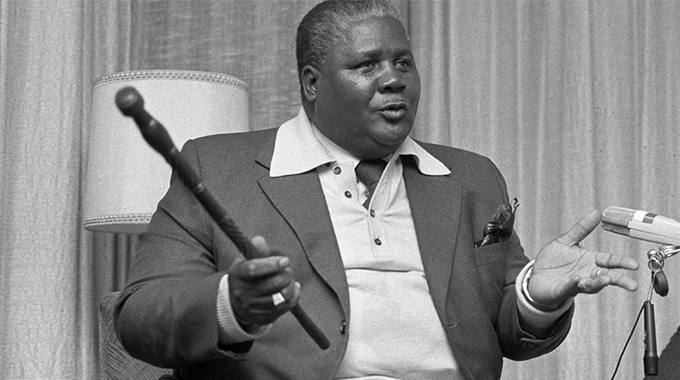
Joshua Nkomo: Politics, Power and MemoryThe late Dr Joshua Nkomo

Again, in chapter eight William J Mpofu flows in the same path of revisionist interpretation as Nkomo is positioned under the various trials he encountered in the story of the liberation of Zimbabwe. 

Above all, Nkomo is interpreted as a philosopher of liberation who envisioned peace and dialogue rather than violence in conflict resolution. Philosophers of liberation as described by Enrique Dussel (1985) are men and women of flesh, blood and bone whose intellectual and social sensitivity, love for life and freedom compel them to rebel against domination of any form. 

The vocation of the philosophers of liberation is not only to humanise and liberate the dehumanised victims of oppression such as colonised peoples, but it is also to humanise and liberate the oppressors such as the colonisers who are entangled in the inhuman condition of being racist haters and exploiters (p. 194). By doing so, Mpofu argues, Nkomo defeated the colonial government and “Machiavellian tactics” to undermine and humiliate him.

Timothy Scarnecchia examines the role of Joshua Nkomo as a diplomat. Scarneccia argues that no much research has been carried out by historians on Nkomo focusing on his diplomatic roles except many studies prior his 1974 release from prison. 

Beyond that, Morgan Ndlovu tackles the various representations on Nkomo using a socio-genetic analysis based on his political life as a product of a particular sociocultural background.

In addition to that, Rudo Gaidzanwa explores Nkomo’s struggles with colonial employment policies, entrepreneurship, ideas about land and land reform in independent Zimbabwe. Chapter 12 as enunciated by Everisto Benyera carters for the need to appropriate Nkomo’s role in transitional justice for full liberation in Zimbabwe. According to Benyera, Transitional Justice entails (2014: 336):

“At a different level, it is concerned with the choices, mechanisms, and the quality of justice implemented by states emerging from episodes of gross human rights abuses such as, civil wars and totalitarian rule, to respond to past oppression and injustice while constructing a new future based on democracy and the rule of law.”

As such, Joshua Nkomo is situated beyond binaries of “Father Zimbabwe” or “Father of Dissidents” and many other titles, tags.  

The last section of the book, part three addresses issues co-authored by Ndlovu-Gatsheni and Busani Mpofu making a comparative analysis of Joshua Nkomo’s idea of Zimbabwe with Mandela’s idea of South Africa. Their political consciousness, and their conceptions of liberation mainly through a comparison of their autobiographies: Nkomo: The Story of my Life and Mandela’s Long Walk to Freedom, respectively.

The Chapter by Sylvester Dombo is an attempt to investigate how the memory of the liberation struggle icon is being appropriated supposedly for nation building. 

Among other issues, Dombo also sought to draw from the press how the issue of honouring Nkomo was covered by the various newspapers in the country. 

What kind of stance did the newspapers take and with what implications for their readership? Dombo paid attention specifically to the issue of the statues that were to be erected to honour Joshua Nkomo in Harare and Bulawayo. 

The study is also situated within the discourses of contested pasts and contested memories. The theme of immortalisation is pursued by Henry Chiwaura. 

The chapter achieves affirming that Nkomo’s immortalisation through several symbols and representations is not about the past as it is intend to shape current discourses within the society. 

The well-documented conflict with Robert Mugabe soon after independence also has an impact on the way Nkomo is memorialised and immortalised in Zimbabwe. Nkomo appears in songs, books and academic articles. Buildings and schools are also named after him. Thabisani Ndlovu further delves into the topic of statues, particularly the one mounted in Bulawayo at the intersection of 8th Avenue and Main Street. 

Drawing on heritage theories, particularly heritage interpretation, the chapter analyses government and counter-government narratives of Joshua Nkomo’s statue(s).

Notwithstanding the above, it’s notable that a number of spelling flaws frequent the passages of this long edited book project. For instance, the ZPRA ordnance and ZPRA ordnance was instead of “ordinance and was” respectively are not well written (p. 22). 

The introductory chapter by Sabelo Ndlovu-Gatsheni was partly uninterestingly written, “The Chap. 3 and The Chap. 4 . . .” as if it was not appropriate to just write Chapter 3 then address the issues raised (p.37-38). There is also lack of spacing on “leadership of” on page 53, rather, it is written “leadershipof.”

All in all, the shortcomings found in the book are of less significance as Joshua Nkomo survives political toxicity in independent Zimbabwe. Perhaps, the very fact that he was not the President of independent Zimbabwe opened doors to the celebratory tone found in this seminal revisionist text. The spirit of Joshua Nkomo lives on 20 years after he passed on.